

In the realm of electrical power systems, protecting against short - circuit currents is a critical aspect that ensures the safety and reliability of the entire infrastructure. As a leading supplier of enclosed switchgear, I have witnessed firsthand the importance of these systems in safeguarding electrical networks from the potentially catastrophic effects of short - circuits.
Understanding Short - Circuit Currents
Before delving into how enclosed switchgear protects against short - circuit currents, it is essential to understand what short - circuit currents are. A short - circuit occurs when there is an unintended low - resistance connection between two conductors at different electrical potentials. This can happen due to various reasons, such as insulation failure, equipment damage, or human error.
When a short - circuit occurs, a large amount of current flows through the circuit, far exceeding the normal operating current. This high - magnitude current can cause overheating, damage to electrical equipment, and even start fires. The magnitude of the short - circuit current depends on several factors, including the source impedance, the type of short - circuit (e.g., phase - to - phase, phase - to - ground), and the configuration of the electrical system.
How Enclosed Switchgear Protects Against Short - Circuit Currents
1. Circuit Breakers
One of the primary components of enclosed switchgear is the circuit breaker. Circuit breakers are designed to detect and interrupt short - circuit currents. They act as a switch that can automatically open the circuit when a short - circuit is detected.
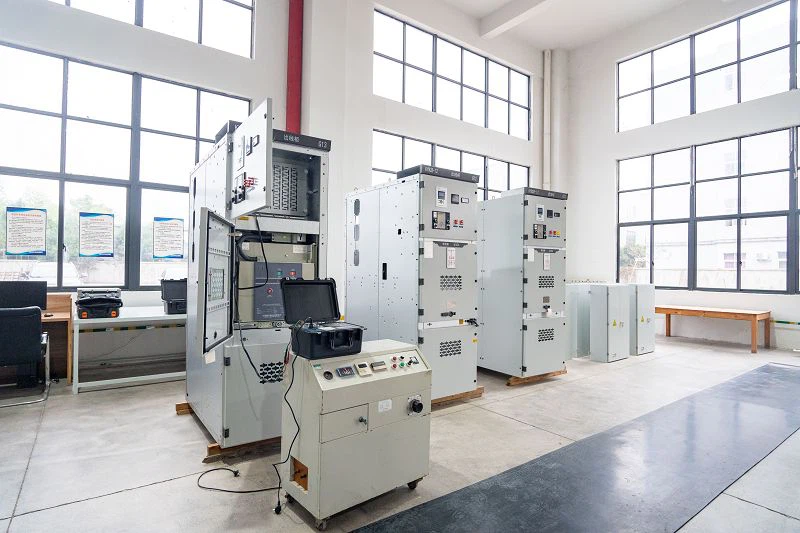

When a short - circuit occurs, the current flowing through the circuit breaker increases rapidly. The circuit breaker's trip unit senses this increase in current and triggers the opening mechanism. The opening time of a circuit breaker is crucial in protecting the electrical system. Modern circuit breakers can operate in a matter of milliseconds, effectively isolating the faulty section of the circuit and preventing further damage.
For example, in a high - voltage power distribution system, a circuit breaker can quickly interrupt a short - circuit current of thousands of amperes. This rapid action helps to minimize the damage to the electrical equipment and reduces the risk of power outages.
2. Fuses
Fuses are another important protective device in enclosed switchgear. A fuse is a simple yet effective device that consists of a metal wire or strip that melts when a certain amount of current passes through it. When a short - circuit occurs, the high current causes the fuse to blow, thereby opening the circuit and protecting the electrical equipment.
Fuses are designed to have a specific current - rating. If the current exceeds this rating, the fuse will melt and break the circuit. Fuses are often used in low - voltage applications and provide an additional layer of protection against short - circuit currents.
3. Enclosure Design
The enclosure of the switchgear plays a vital role in protecting against short - circuit currents. The enclosure is designed to contain the arc and the high - energy gases generated during a short - circuit. It provides a physical barrier that prevents the spread of the arc and the associated hazards to the surrounding environment.
The enclosure is typically made of metal or other fire - resistant materials. It is designed to withstand the mechanical and thermal stresses caused by the short - circuit current. The enclosure also helps to protect the internal components of the switchgear from external factors such as dust, moisture, and physical damage.
4. Protection Relays
Protection relays are used in enclosed switchgear to monitor the electrical parameters of the circuit and detect abnormal conditions. These relays can sense changes in current, voltage, and other electrical quantities. When a short - circuit occurs, the protection relay sends a signal to the circuit breaker to open the circuit.
Protection relays can be programmed to provide different levels of protection, depending on the requirements of the electrical system. They can be set to detect over - current, under - voltage, and other abnormal conditions. By using protection relays, the switchgear can respond quickly to short - circuit events and protect the electrical system.
Benefits of Enclosed Switchgear in Short - Circuit Protection
1. Safety
The most significant benefit of enclosed switchgear is the enhanced safety it provides. By containing the arc and the high - energy gases generated during a short - circuit, the switchgear reduces the risk of injury to personnel and damage to the surrounding environment. The enclosure also helps to prevent the spread of fire and explosion, which can be a major concern in electrical systems.
2. Reliability
Enclosed switchgear is designed to be highly reliable. The circuit breakers, fuses, and protection relays are all tested and certified to meet strict safety and performance standards. This ensures that the switchgear can operate effectively in the event of a short - circuit and protect the electrical system from damage.
3. Flexibility
Enclosed switchgear can be customized to meet the specific requirements of different electrical systems. It can be designed to handle different voltage levels, current ratings, and types of loads. This flexibility makes it suitable for a wide range of applications, from small commercial buildings to large industrial plants.
Applications of Enclosed Switchgear
Enclosed switchgear is used in various applications where short - circuit protection is required. Some of the common applications include:
1. Power Generation
In power generation plants, enclosed switchgear is used to protect the generators, transformers, and other electrical equipment from short - circuit currents. The switchgear ensures the reliable operation of the power generation system and helps to prevent power outages.
2. Industrial Facilities
Industrial facilities such as factories and refineries rely on enclosed switchgear to protect their electrical systems. The switchgear helps to prevent damage to the equipment and ensures the safety of the workers.
3. Commercial Buildings
Commercial buildings such as offices, shopping malls, and hospitals use enclosed switchgear to protect their electrical systems. The switchgear helps to ensure the continuous operation of the building's electrical equipment and provides a safe environment for the occupants.
Related Products
As a supplier of enclosed switchgear, we also offer a range of related products that can enhance the performance and safety of the electrical system. These products include High Distribution Cabinet, AC Power Distribution Cabinet, and Small Plastic Junction Box.
Conclusion
Enclosed switchgear plays a crucial role in protecting electrical systems against short - circuit currents. Through the use of circuit breakers, fuses, enclosure design, and protection relays, the switchgear can effectively detect and interrupt short - circuit currents, ensuring the safety and reliability of the electrical system.
If you are in need of enclosed switchgear or related products for your electrical system, we invite you to contact us for a detailed discussion and procurement negotiation. Our team of experts is ready to provide you with the best solutions tailored to your specific requirements.
References
- Blackburn, J. L. (1998). Protective Relaying: Principles and Applications. Marcel Dekker.
- Grigsby, L. L. (Ed.). (2007). Electric Power Engineering Handbook. CRC Press.
- IEEE Standard for Metal - Enclosed Low - Voltage Power Circuit Breaker Switchgear (IEEE Std 1558 - 2007).